Why do so many Paris buildings look alike?
The cream-coloured Paris of postcards was ordered into existence by rules on height, stone and even balconies.
▶ Start the storySo many Paris buildings look alike because the law told them to. In 1853 Emperor Napoleon III put Georges-Eugène Haussmann in charge of Paris with a mission: make the city healthier, less congested and grander. Haussmann's workers tore down hundreds of old buildings and cut 80 kilometres of new avenues. The buildings that lined them had to be the same height, in a similar style, and faced with cream-coloured stone. That is the uniform look you see on the boulevards today.
The rules went into surprising detail. A 1859 regulation tied facade height to street width, allowing 20 metres on the new 20-metre-wide streets, and kept roofs under a 45-degree slope. Neighbouring buildings had to share the same floor heights and main facade lines, and cut stone was compulsory on the new boulevards. The result is the classic recipe: a continuous balcony on the second floor, the "noble" one, and another on the fifth, lining up from one building to the next.
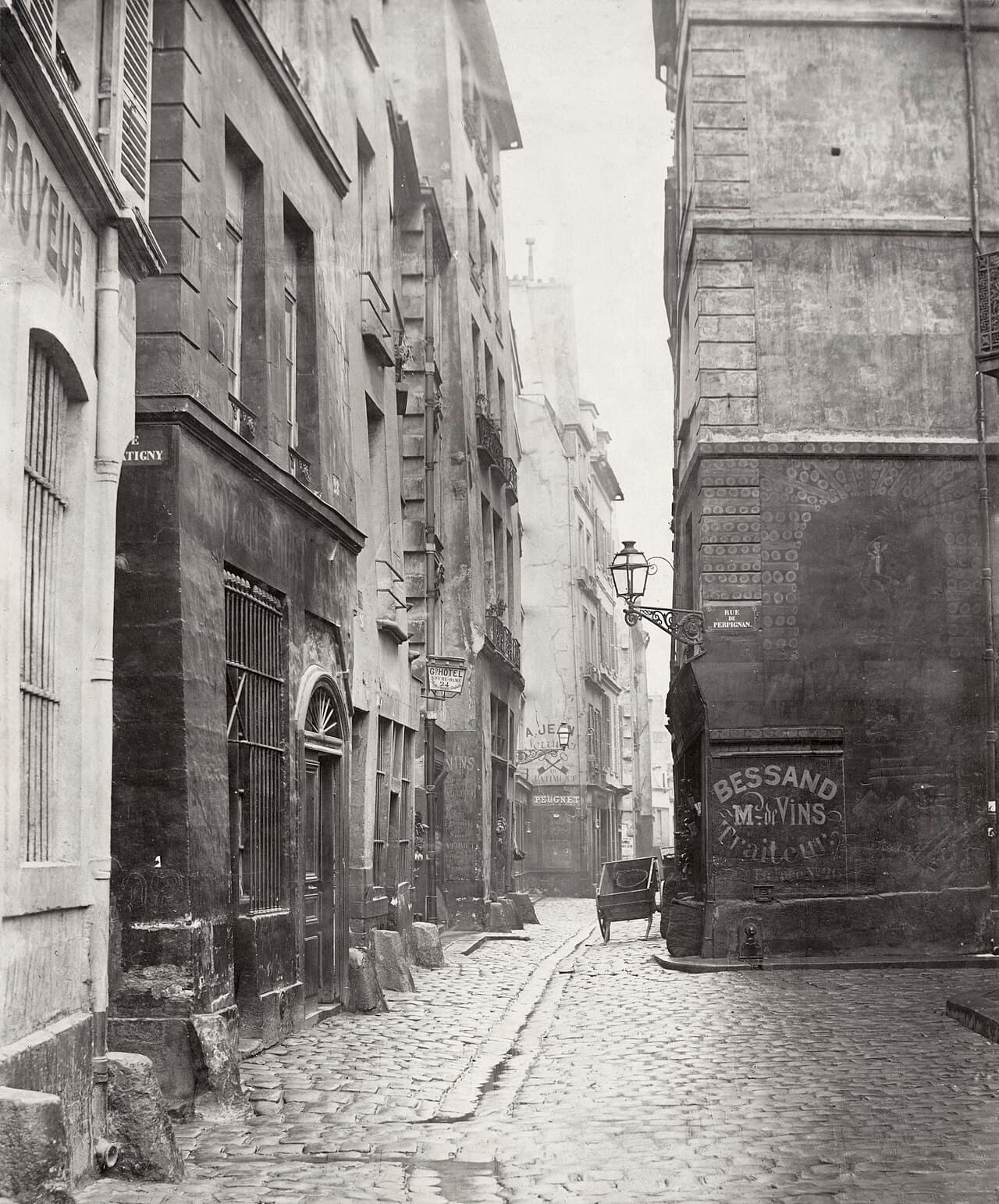
The old city had real problems. In 1840 a doctor found 23 people living in a single 5-square-metre room, and cholera swept Paris in 1832 and 1848. The narrow streets were also perfect for barricades. The cost of the new Paris was huge: by Haussmann's own estimate, 350,000 people were displaced. Critics forced him out in 1870, but his city is still the Paris we picture.
Step 1: Height
Up to 20 m on a 20 m-wide street (1859)
Step 2: Stone
Cut stone compulsory on the new boulevards
Step 3: 2nd floor
The "noble" floor, with a continuous balcony
Step 4: 5th floor
Another continuous balcony, with a view
Step 5: Roof
Kept under a 45° diagonal
Quiz me
0/3
Recap
Same height, same cream stone, same floor lines, balconies on the second and fifth floors: Paris looks alike because it was ruled that way.
Surprising fact · Victor Hugo complained you could hardly tell whether a building was a theatre, a shop or a library.
Connects to
Sources (3)
No source, no claim. Every fact in this lesson (16 claims) cites at least one of these.