Why is there a medieval castle hidden under the Louvre?
Beneath the Mona Lisa's museum lie the walls of a fortress built to keep out the English. It was rediscovered while digging for the glass pyramid.
▶ Start the storyThere is a castle under the Louvre because the Louvre began as one. In 1190 King Philip II of France, about to leave on the Third Crusade, ordered a wall around Paris and built a fortress at its western end, on the road to Normandy, which his English rivals still held. Finished in 1202, it was a square stronghold with walls 2.6 metres thick, a water-filled moat and a 30-metre keep, the Great Tower. Today's museum grew, layer by layer, on top of it.
Over the centuries the fortress became a palace. Charles V turned it into a royal residence in the 14th century and installed a library of about 900 books in one of its towers. Francis I demolished the old keep in 1528 and began a Renaissance palace. When Louis XIV moved to Versailles in 1682, the Louvre was left mainly to display the royal art collection. Then came the Revolution: the king's collection became national property, and on 10 August 1793, exactly a year after the monarchy fell, the Louvre opened as a public museum.
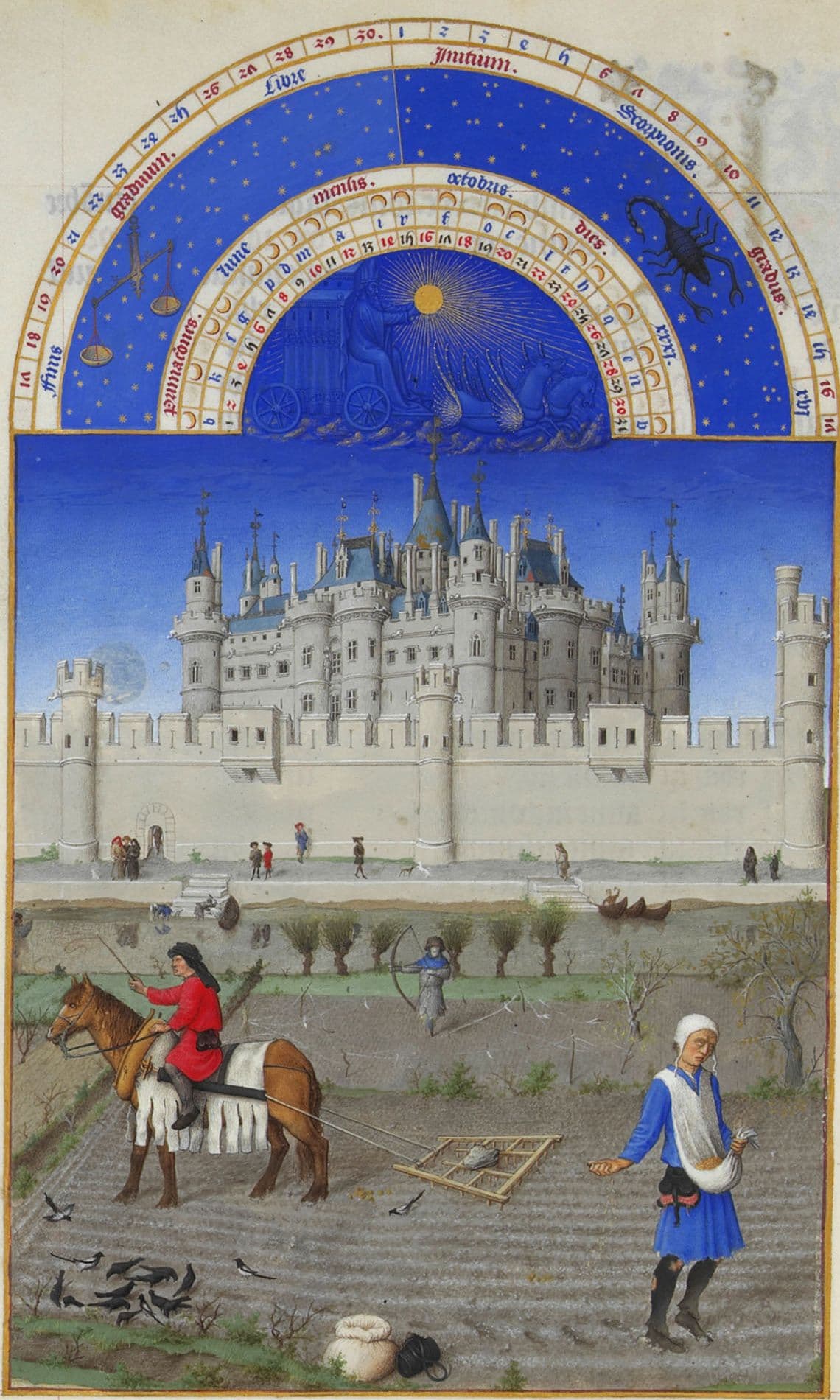
The castle was not forgotten so much as buried. Between 1983 and 1985, as the Louvre was being reorganised around I. M. Pei's future glass pyramid, archaeologists excavated the fortress's remains. They are conserved underground, and visitors can still see the medieval walls in the crypt, beneath galleries where millions come to see the Mona Lisa.
Quiz me
0/3
Recap
Fortress (1190), palace (Charles V, Francis I), museum (1793): the medieval walls are still in the crypt.
Surprising fact · The museum opened on 10 August 1793, exactly one year after the fall of the monarchy, displaying the king's own collection.
Sources (2)
No source, no claim. Every fact in this lesson (20 claims) cites at least one of these.