How did a monk's pea plants reveal the rules of heredity?
Gregor Mendel solved heredity in a monastery garden in 1865. Almost nobody noticed for 35 years.
▶ Start the storyMendel's peas showed that heredity works with separate units passed from parent to child, not with a blend. In his day, most biologists thought a child's traits were an average of its parents'. Mendel, a monk in Brno, tested this by counting.
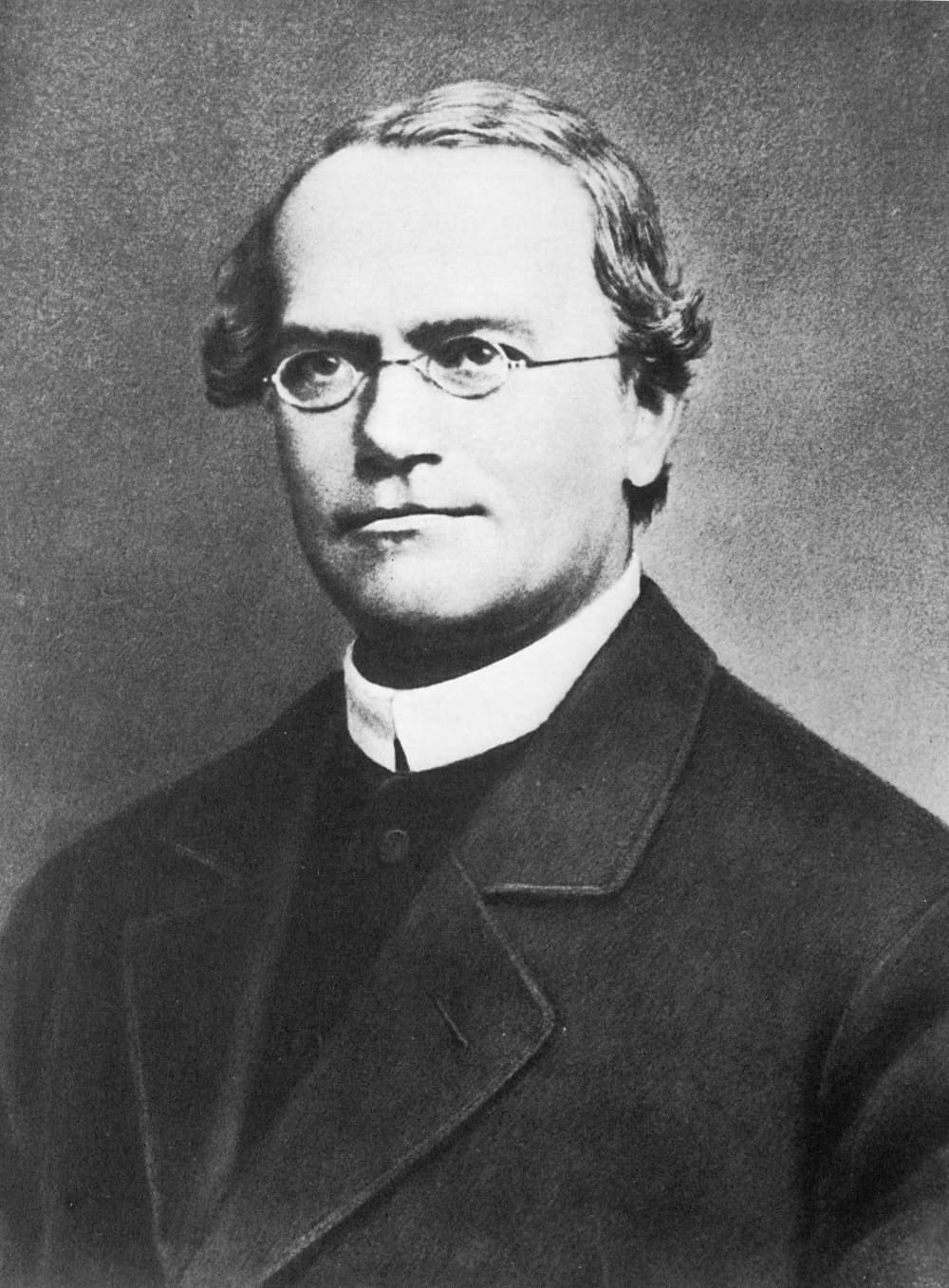
He wasn't an obvious scientist. He failed the oral part of his teaching exam twice. But between 1856 and 1863, in his monastery's garden, he grew and tested some 28,000 plants, most of them peas. He tracked traits that came in two clear forms only: round or wrinkled seeds, purple or white flowers. Either-or traits can be counted without guesswork.
He crossed purebred purple plants with purebred white ones. Every offspring was purple. No blend at all. Then he let those purple plants pollinate themselves. White flowers came back, in a steady ratio of three purple to one white.
His explanation: each plant carries two "factors" for a trait, one from each parent. One factor can hide the other without destroying it. Mendel called the visible one dominant and the hidden one recessive. Today we call his factors genes.
He presented his work in 1865 to about forty scientists. They don't seem to have understood it. The paper was cited only about three times in 35 years. Mendel reportedly told a friend, "My time will come." He died in 1884. In 1900, three scientists in three countries rediscovered his rules, and his time came.
Quiz me
0/3
Recap
Each organism carries two hereditary factors per trait, one from each parent, and a dominant factor can mask a recessive one without erasing it.
Surprising fact · Mendel's 1866 paper was barely noticed for 35 years, until three scientists rediscovered his rules in 1900.
Sources (2)
No source, no claim. Every fact in this lesson (30 claims) cites at least one of these.