Where do brand-new traits come from in the first place?
Every child is born with about 60 new mutations that neither parent had. Most do nothing. A few matter a lot.
▶ Start the storyNew traits start as mistakes in DNA. A letter gets swapped, lost or added, or a whole stretch is copied twice. These changes are called mutations. They are the ultimate source of all genetic variation: the raw material that natural selection works on. Without them, heredity could only reshuffle what already exists.
Mutations come from errors when DNA is copied, or from damage to it. Damage is constant. In each human cell, oxidation alone harms DNA about 10,000 times a day. Repair systems mend most of it before it becomes a permanent mutation. A few changes slip through. On average, each child carries about 60 new mutations that neither parent had. Every extra year of the father's age adds about two more.
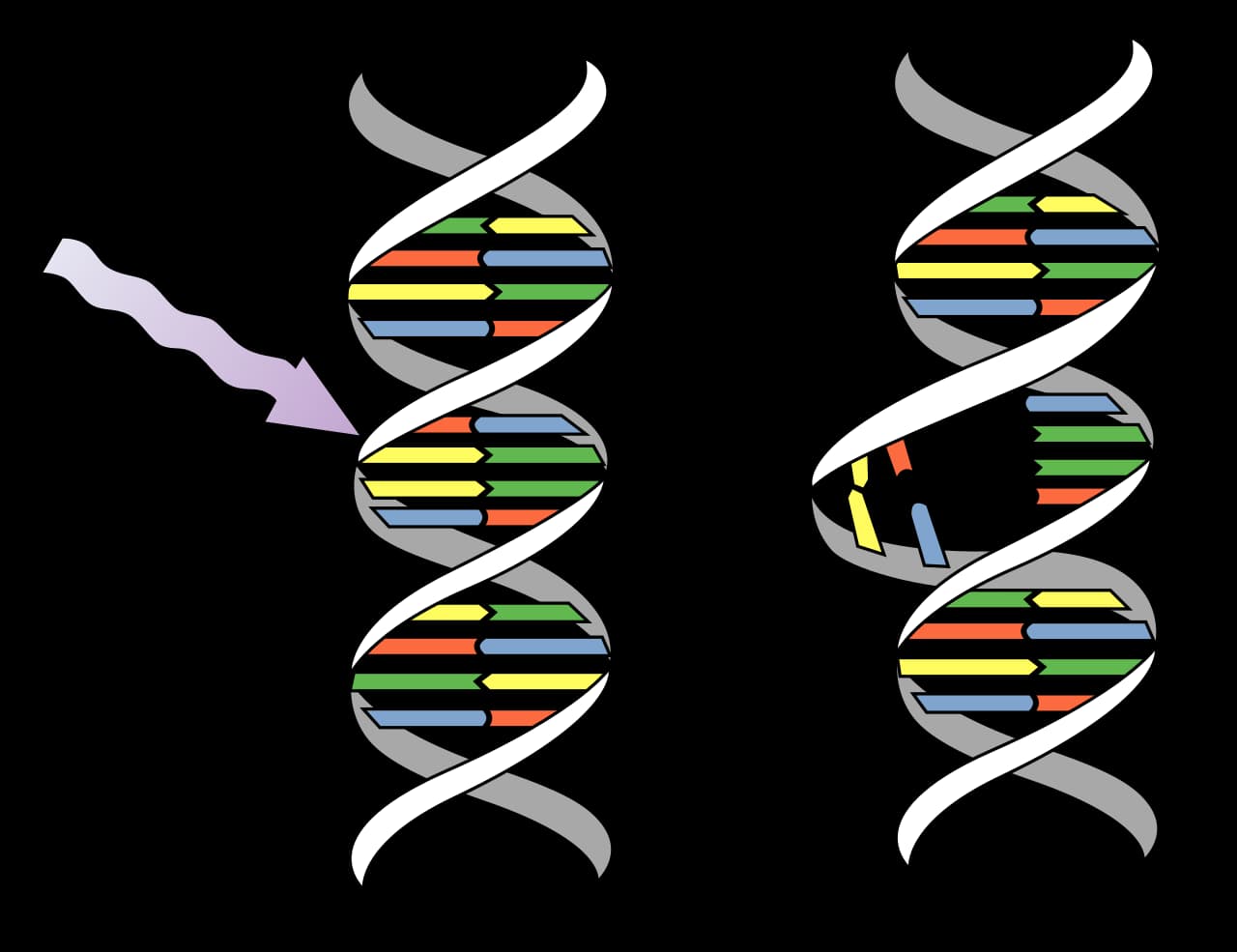
Most mutations change nothing that matters. In animals and plants, most of the genome doesn't code for proteins, so most mutations are neutral. When a mutation does change a protein, the news is usually bad. A 2007 study of fruit flies estimated that about 70% of such changes are harmful. The rest are neutral or only slightly helpful.
Sometimes one letter is enough. DNA is read three letters at a time, and each triplet picks one building block of a protein. In the gene for part of haemoglobin, one swapped letter puts the building block valine where glutamic acid should be. That single change causes sickle cell disease. In Darwin's finches, a stretch of DNA around a gene called ALX1 helps decide whether a beak is sharp or blunt.
Mutations don't appear because an organism needs them. They come first, at random. Natural selection comes after, keeping the rare useful ones and weeding out the harmful ones.
Quiz me
0/3
Recap
Mutations appear at random, whether they help or not; only afterwards does natural selection favour the useful ones.
Surprising fact · One swapped DNA letter, in the gene for part of haemoglobin, is enough to cause sickle cell disease.
Sources (3)
No source, no claim. Every fact in this lesson (19 claims) cites at least one of these.