Can a species evolve by pure luck, with no selection at all?
A 1775 typhoon left 20 survivors on one Pacific island. Today, 1 in 10 islanders is completely colorblind, by pure chance.
▶ Start the storyYes. Chance alone can make a gene version more common, or wipe it out, with no help from selection. Biologists call this genetic drift. Picture a jar of 20 marbles, half red and half blue. To fill the next jar, draw a marble at random, note its colour, put it back, and repeat 20 times. The new jar is rarely exactly half and half. Keep going, jar after jar, and one colour can vanish for good, though neither colour was ever better.
Step 1: Equal start
Half red marbles, half blue, standing in for two neutral gene versions
Step 2: Random draw
Each generation is a random sample of the last: chance, not quality
Step 3: Ratio wobbles
Sometimes more red, sometimes more blue, each generation
Step 4: Small population, big swings
In a small jar, a whole color can vanish within a few draws
Step 5: Fixation
One version takes over completely, with no help from selection
Drift is strongest in small groups. In 1775, a typhoon left only 20 people alive on the Pacific island of Pingelap. By chance, the survivors carried a rare recessive gene for complete colour blindness. Today about 10% of islanders are completely colour-blind, and another 30% carry the gene.
The same thing happens when a few people found a new community. This is called the founder effect. The Amish in the United States grew from very few founders, took in few newcomers, and mostly marry within the community. Extra fingers or toes, though still rare, are more common among them than in the wider American population.
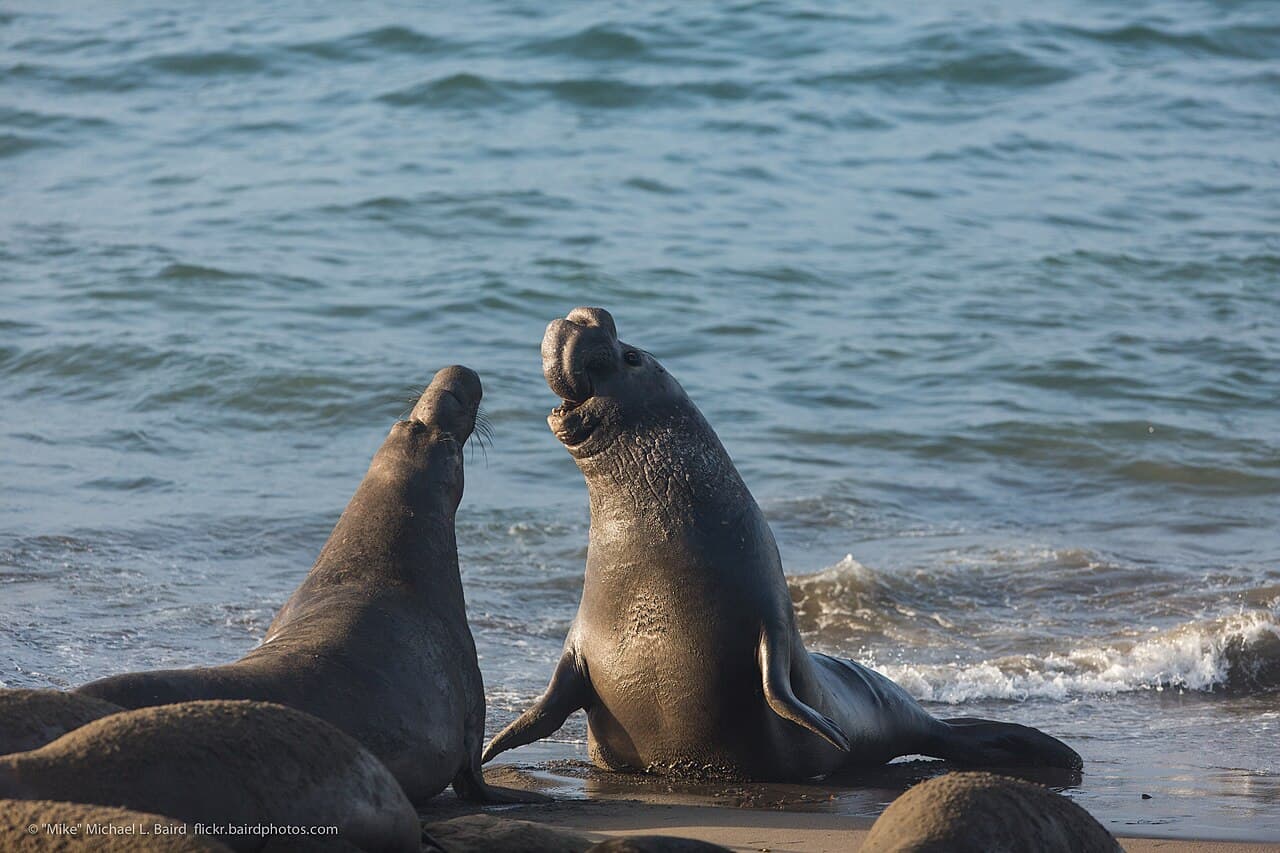
A crash in numbers, called a bottleneck, can do this to a whole species. Hunted for the oil in their blubber, northern elephant seals fell to perhaps 20 to 40 animals by the end of the 19th century. Protected since, they now number more than 200,000. But the crash left them with very little genetic diversity.
For decades, most biologists thought drift barely mattered. In 1968, Motoo Kimura argued the opposite for DNA itself. Most changes that spread through a population at the molecular level, he said, are neutral mutations carried along by drift.
Quiz me
0/3
Recap
In small populations, random sampling from one generation to the next can eliminate or fix a gene variant with no help from selection at all.
Surprising fact · A 1775 typhoon left Pingelap with 20 survivors; today roughly 10% of islanders are completely colour-blind because of a rare gene those survivors happened to carry.
Sources (4)
No source, no claim. Every fact in this lesson (15 claims) cites at least one of these.